Courtney Coombs
Linda Knight
Antoinette J. Citizen
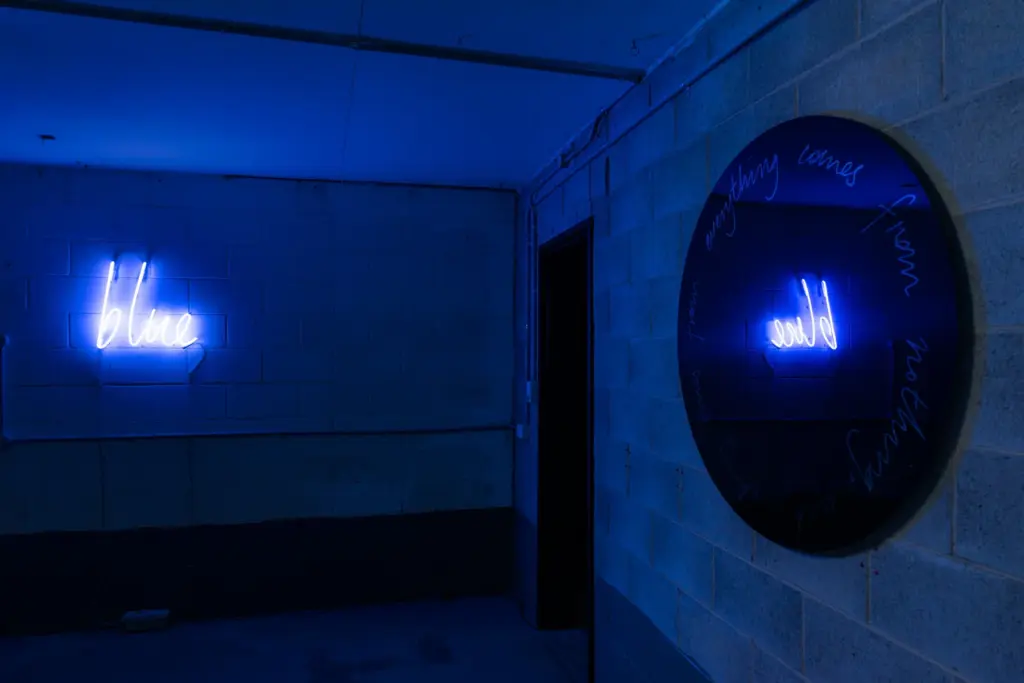
Courtney Coombs makes art, writes, and facilitates to make sense of the world and their place in it. They are heavily influenced by situations and captivated by the relational. Employing queer-centric, anti-spectacular methodologies, they privilege periods of observing, thinking, feeling, learning, and unlearning as much as realising a final form, which often involves reimagining everyday encounters. Driven by concepts and seduced by the potential of uncertainty and ambiguity, their minimally presented liaisons include objects, installations, 2-dimensional works, moving images and sound, discourse, dialogue, and community building. Courtney imbues these subjective and gestural propositions with a hopeful criticality concerned with disrupting dominant narratives about worth and value and prompting different ways of seeing, understanding and being.
Linda Knight is an artist and academic living and working on the traditional lands of the Wurundjeri-willam, the Woi-wurrung language group of the Kulin Nation, Melbourne, Australia. Her drawing and textile-based practices are grounded in personal identity and history.
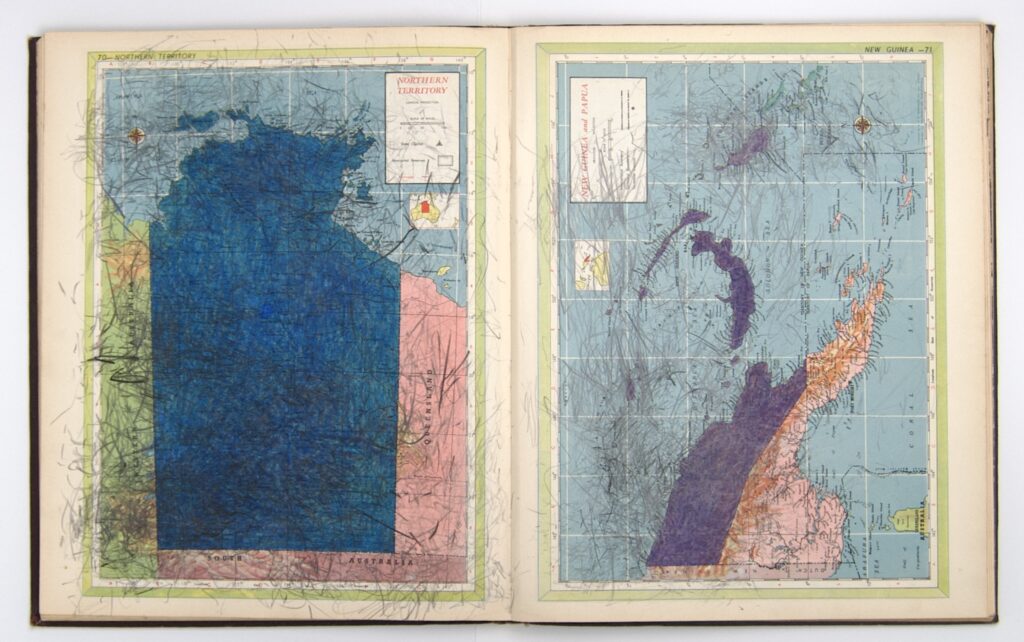
Born in the UK to English and Welsh parents, Knight migrated to Australia in 2000. Knight’s heritage and background inform her work, which explores experimental cartographies. Her drawings and textile works use animals, social media videos, domestic utilitarian textiles, and cartographic imagery, overlayering realism with gestural mark-making, Mercator map schema with traditional patchworking designs, and sashiko-inspired stitching to create new narratives from blended masculine and feminine modes of recording.
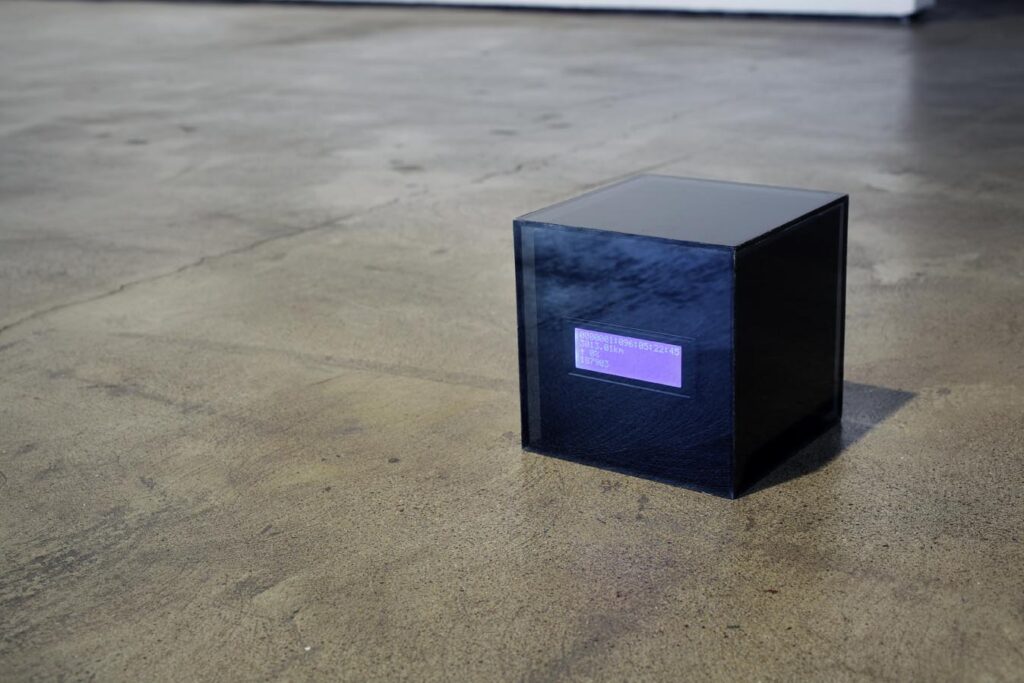
Antoinette J. Citizen makes kinetic objects, installations and environments — things that move, sense and respond. She treats electronics, mechanism and code as materials, worked and tested rather than aimed at a fixed outcome, and much of the practice lives in the making itself: the tinkering, the dead ends, the patience of following a system to see what it does. Her recurring concerns: datafication, surveillance, the quantified self, physical phenomena are approached through the technologies that produce them, using the tools of a culture to examine that culture in turn. She is interested in how technical systems shape the way we are counted, watched, sorted and known, and in what happens when those systems are slowed down, taken apart, or made to behave unexpectedly.